
The journal — Beef tips
What is aged beef, and why does it change everything?
On any steakhouse menu, two words come up again and again: aged beef. Behind the term lies real know-how, made of time, cold and patience. Here, without jargon, is everything you need to understand.
The essentials in thirty seconds
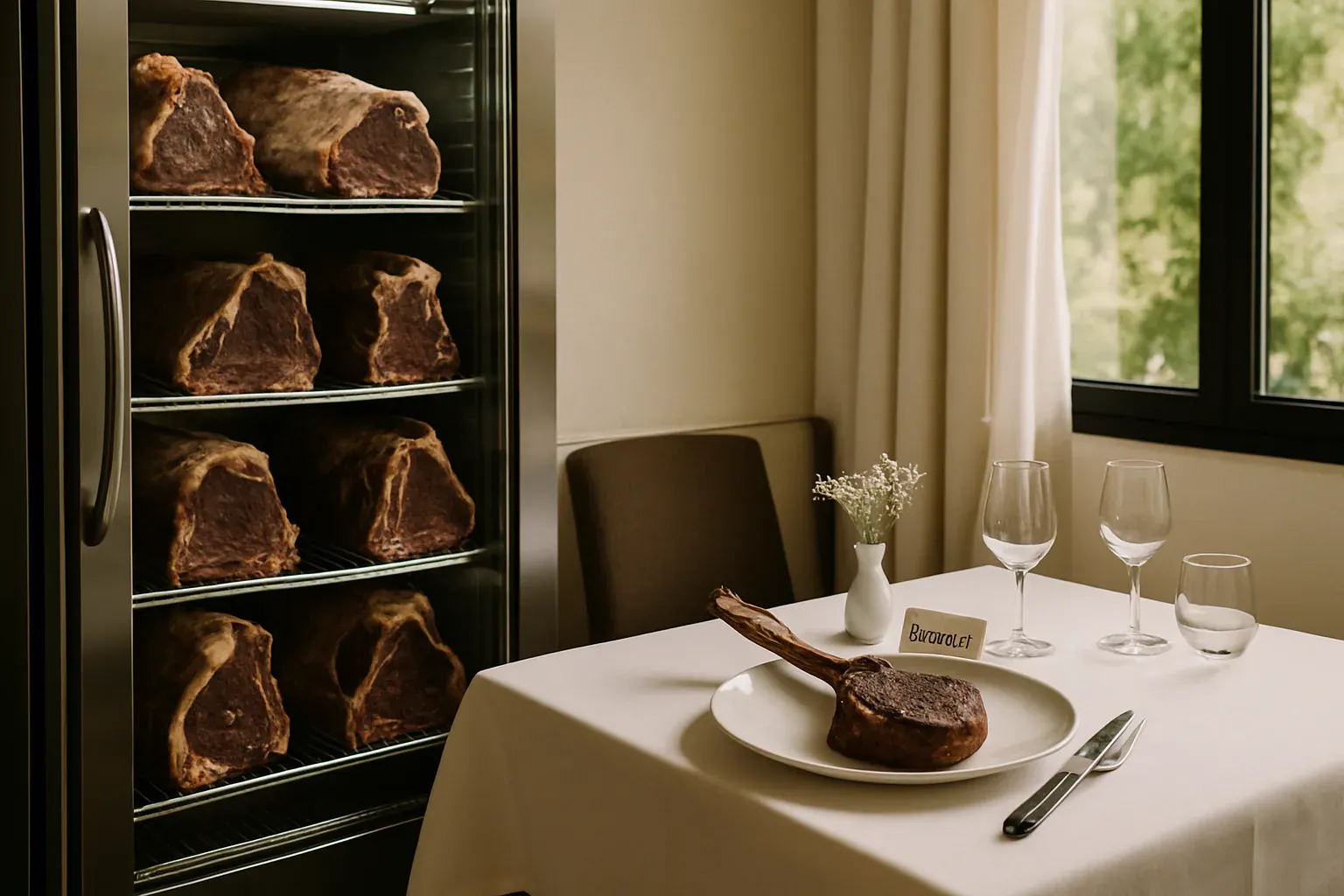
Aged beef is meat rested for several weeks in controlled cold, humidity and airflow. Natural enzymes tenderise the fibre while deep, almost nutty aromas develop. Two methods exist: dry-ageing, in open air, which concentrates flavour, and wet-ageing, vacuum-sealed, which tenderises without weight loss. Good ageing reveals the meat rather than hiding it: more tender, more flavourful, more complex than fresh beef.
The definition
Aged beef,
in two words
Ageing beef simply means giving it time. A fine cut rests in a cold room where every parameter is controlled — a temperature just above zero, precise humidity and constant airflow — for anywhere from a few days to several weeks.
It is neither a trend nor a restaurant trick. Ageing is one of the oldest butchery skills: long before fridges, cooks knew that meat kept cool for a few days grew more tender and flavourful. Modern cold control simply turned that instinct into a precise craft.
The why
Why rest the meat
Freshly cut meat is firm, sometimes stiff: its muscles have contracted and not yet relaxed. Ageing serves two very concrete goals — tenderness and flavour.
Natural enzymes break down fibres and collagen, so the cut softens. Meanwhile the water slowly evaporates, concentrating flavour, while richer, deeper, buttery and slightly nutty aromas form. Aged beef isn't only more tender — it simply tastes of more.
The methods
Dry or wet
There are two main ways to age beef; a good steakhouse picks one to suit the cut and the effect.
Dry-ageing
The noble method. The cut rests uncovered in a dedicated cellar; water evaporates, a protective crust forms (removed before cooking) and flavour concentrates intensely. It gives the deepest notes but needs time, space and accepted weight loss.
Wet-ageing
The meat rests vacuum-sealed in its own juices. Enzymes tenderise the fibre with no evaporation: more tenderness, no weight loss, no crust. Flavour is milder and fresher, the method faster and more consistent.
Which to prefer
Neither is 'better' outright. Dry-ageing suits large grilling cuts where you want deep beef flavour; wet-ageing suits cuts you simply want more tender, served fresh. The skill is matching method to cut.
The time
How long
to count on
There is no magic duration: it depends on the cut, the method and the taste sought. Roughly a few days to several weeks. Early days work tenderness; later weeks deepen aroma.
A short ageing gives noticeably more tender meat with a fresh taste; several weeks brings a more intense, complex register with buttery, nutty notes. Past a point the flavour turns very strong and no longer pleases everyone. The art is stopping at the point of balance.
In the muscle
What happens
in the meat
Ageing is nothing mysterious: a natural phenomenon controlled step by step. Understanding it explains why aged beef differs so much from fresh, and why it demands such care.
- 01Natural enzymes break down fibres and collagen: the meat tenderises from within.
- 02Water slowly evaporates at the surface (dry): flavour concentrates.
- 03Richer, deeper aromas form: buttery, sometimes slightly nutty.
- 04In dry-ageing, the outer crust protects the core; it is removed before cooking.
The right cue
Spotting good ageing
At the counter or on the plate, a few signs don't lie.
Colour
Well dry-aged beef shows a deeper, richer hue than fresh meat. The dark outer crust is normal and removed before cooking; beneath it, the core stays a dense red.
Grain and fat
Fine, even marbling and clean, well-coloured fat are excellent signs. Fat melts while cooking and bastes the meat. Avoid a dull look or unpleasant smell.
Provenance
Good ageing starts from good raw material: known breed, known origin, the right cut. No cellar works miracles without that base.
The cuts
Best cuts
to age
Not every cut suits ageing. Some are made for it, others less so.
In the kitchen
How to cook aged beef
Aged beef deserves respect. The golden rule: take it out of the fridge well ahead so it returns to temperature, sear it hard for a fine crust, then bring it to the doneness you like — rare to medium — without drying it out.
The real secret is resting after cooking: let it settle a few minutes before slicing so the juices spread back through the muscle instead of running onto the plate. Season simply: fine salt, a turn of pepper, maybe a flavoured butter — and let the cut speak.
To correct
Myths to drop
- 'Aged means old or spoiled.' False: ageing is a controlled, hygienic process, the opposite of meat going off.
- 'The more aged, the better.' No: past a point the flavour turns very strong and won't please everyone. Balance beats duration.
- 'Any cut can be aged.' Not really: well-marbled grilling cuts suit it, others much less.
- 'The dark dry-aged crust is waste.' It protects the flesh and is removed before cooking — part of the process.
- 'It's just marketing.' Ageing is a genuine old craft demanding time, space and accepted weight loss.
At our place
At our
table
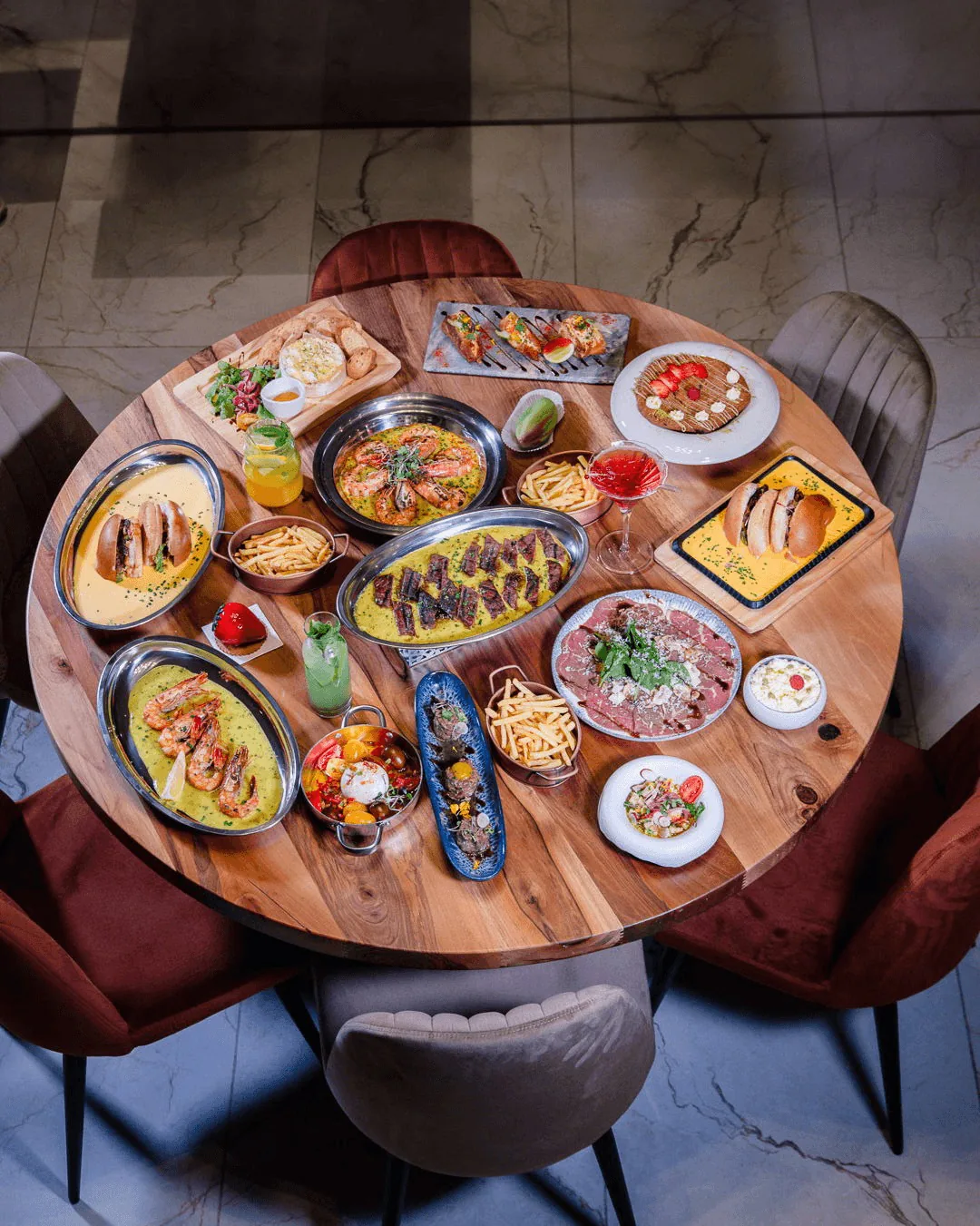
At L'Entrecôte de Dubaï, fine aged beef is at the heart of our kitchen. We believe in French generosity, with the rib-eye seared to order in the lead role — worked with patience, served with respect.
And because a great cut calls for a great wine, our sommelier guides you through a cellar of over 200 references to find the pairing that reveals the meat. That is where the theory finally makes sense: at the table.
Browse our aged beef on the menu and let our team guide you through a memorable meal.
Discover the wine cellar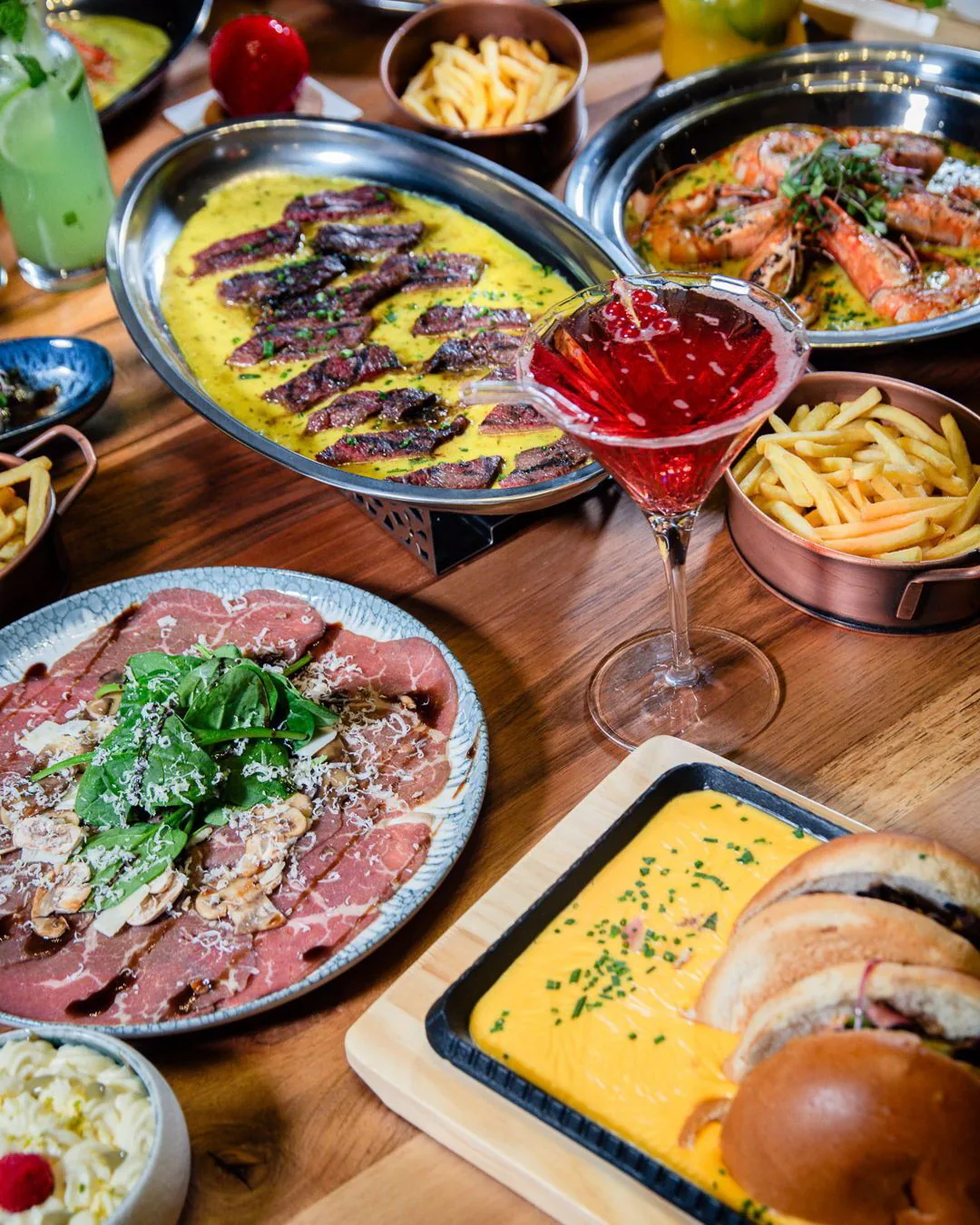
Frequently asked
Aged beef, in practice
What exactly is aged beef?
Beef rested for days to weeks in controlled cold, humidity and airflow. This rest tenderises it and develops richer aromas than fresh meat.
What is the difference between dry and wet ageing?
Dry-ageing happens in open air: water evaporates and flavour concentrates intensely. Wet-ageing happens vacuum-sealed: the meat tenderises without weight loss, for a milder, fresher taste.
How long should beef be aged?
From a few days to several weeks depending on the cut and taste. Early days work tenderness; later weeks develop deeper, more complex aromas.
Is aged beef dangerous to eat?
No. Ageing is a controlled, hygienic process, very different from meat spoiling. Controlled cold, humidity and air keep it safe and flavourful.
Which cuts age best?
Well-marbled grilling cuts: rib-eye, sirloin and bone-in rib. Fillet, already tender, mainly gains in flavour with a short ageing.
How do you cook aged beef?
Bring it to temperature, sear it hard for a crust, cook to the doneness you like, then rest it a few minutes before slicing. Season simply.
Read on
Find all our practical guides, pairings and steakhouse know-how in our conseils viande et vin.
Fancy a fine aged steak?
Aged rib-eye seared to order, a cellar of over 200 references and service until 1 a.m., in Plan de Campagne.