
The journal — Beef tips
How to choose your cut of beef, with confidence
Rib-eye, sirloin, fillet, flank… There is a simple logic behind these names. Here is how to read a cut of beef and pick the one that truly matches what you want to cook.
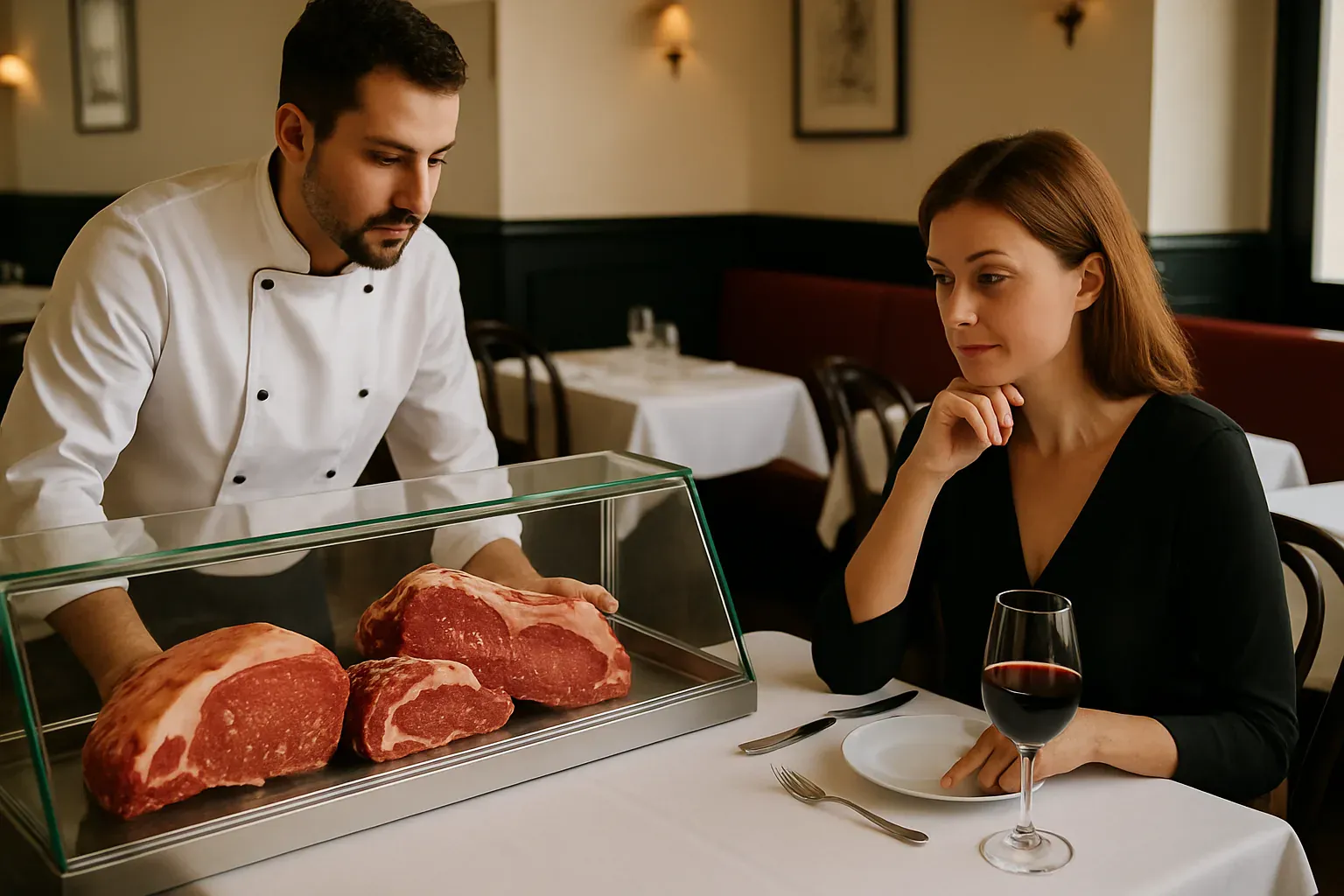
The essentials in thirty seconds
Choosing a cut of beef means matching three things: where it sits on the animal, how you'll cook it, and the occasion. Little-worked muscles (fillet, rib-eye, sirloin) are tender and grill fast; hard-working muscles (chuck, cheek, shin) are firmer and richer, made for braising. Marbling — the fine veins of fat — signals juiciness. A fine cut shows bright colour, even grain and creamy fat. For a steak: pick a marbled cut to grill; for a stew, a collagen-rich cut. The rest is cooking and resting.
The principle
The logic of a
cut of beef
One rule explains everything: a muscle's tenderness depends on how hard it worked in life. Much-used muscles — shoulder, thigh, neck — are firm and rich in collagen, needing time and gentle heat. Little-used muscles, along the spine, stay naturally tender.
That is why the fillet, tucked under the vertebrae, is the most tender cut, while cheek or chuck need hours of braising. Remember this: short, fierce heat for tender cuts, long and patient cooking for working cuts.

The beef map
The main cut
families
Along the back sit the noble grilling cuts: rib-eye and sirloin, generous and marbled, plus the fillet, the most tender of all. They cook in minutes and need almost nothing.
Then come long-fibre cuts — flank, hanger, skirt — flavourful and best seared then sliced across the grain. Finally the front and leg cuts — chuck, cheek, shin — the braising family, rich in collagen, turning meltingly tender after slow cooking.
What you see
Marbling and grain
Two visible details tell you a lot: marbling and grain. Marbling — the fine veins of fat inside the muscle — melts with heat and bastes the meat from within: the finer and more even, the juicier and more tender the cut.
The grain is the visible texture of the flesh. A tight, fine grain means a tender cut; a looser, open grain signals a more rustic, often tastier but firmer piece. Reading colour, marbling and grain together is like reading a label without words.
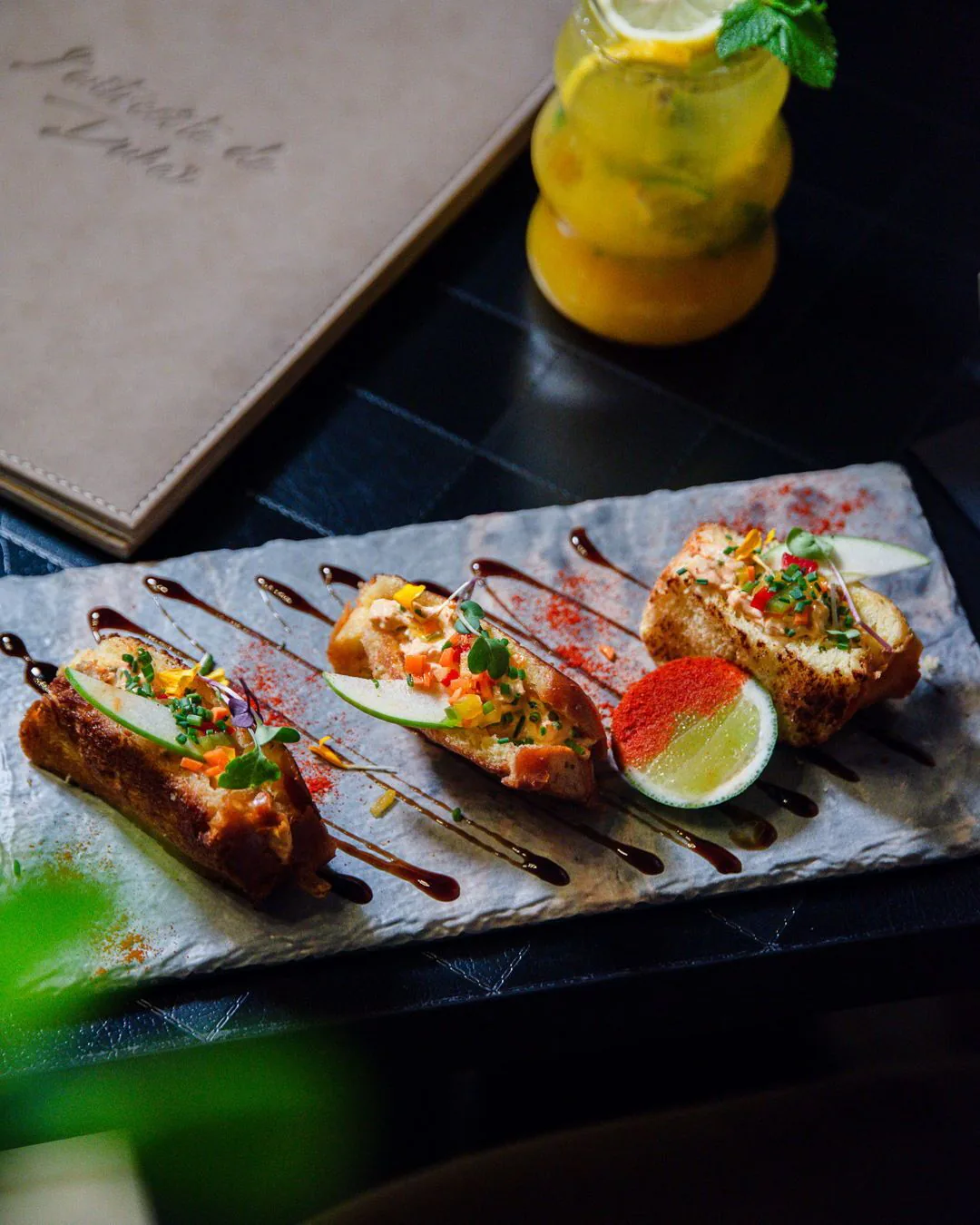
The right use
Each cut its use
Three main uses cover most cravings.
To grill
Rib-eye, sirloin, fillet, flank: tender or short-fibre cuts, seared fast over high heat, then rested.
To braise
Chuck, cheek, shin: collagen-rich working cuts, cooked long and slow so the collagen melts into gelatine.
Raw or barely seared
Fillet heart and lean noble cuts suit carpaccio or tartare, where freshness and clean slicing matter most.
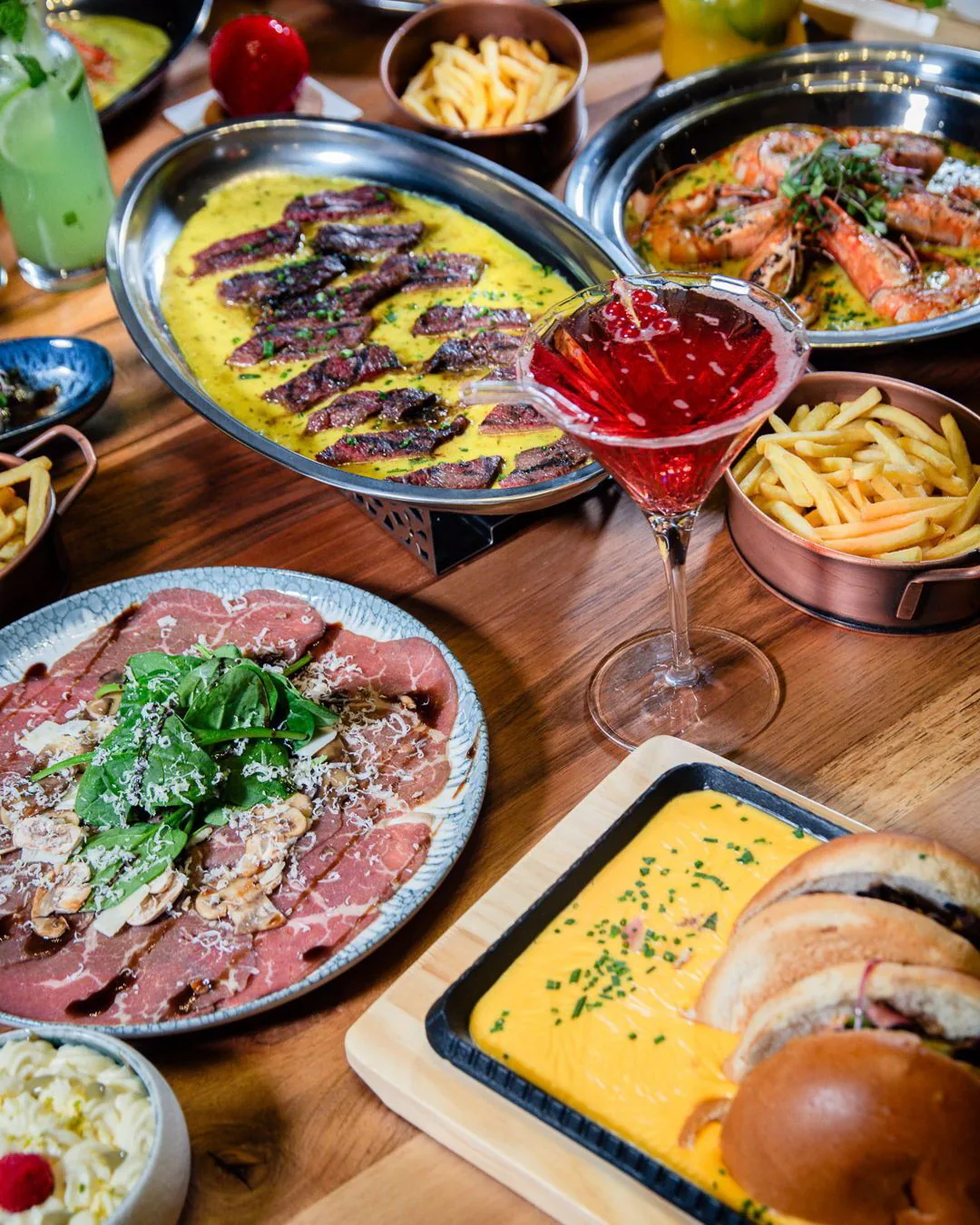
The steak cuts
Cuts to grill
The stars of the counter. Each has its character — pick by flavour, melt or finesse. All share short, fierce cooking, a good crust, a juicy core, then an essential rest before slicing.
- 01Rib-eye: marbled and generous, the pleasure cut, never dry. The house signature.
- 02Sirloin: leaner and even, for those who like a frank, balanced beef.
- 03Fillet: the most tender, buttery, milder in taste, for delicacy over power.
- 04Flank and hanger: tasty long-fibre cuts, seared rare and sliced thin across the grain.
In short
At a glance
Four markers to choose without hesitation.
Upstream
Breed, origin
and ageing
The cut isn't everything: origin matters just as much. Breeds like Black Angus are selected for consistent, finely marbled flesh; Wagyu pushes marbling to a spectacular level. Choosing a cut is also choosing an origin and a farming know-how.
Ageing changes everything too. Resting beef for weeks in controlled cold concentrates aromas and tenderises the fibre. The same cut, by breed, origin and ageing, can offer very different experiences.
Understand aged beefA trained eye
Spotting fresh beef
A few signs never lie.
Colour
A bright, frank red, never dull or greyish. Freshly cut beef may look darker inside then redden with air — that's normal.
Fat
Creamy to pearly-white fat, firm to the touch. Soft or oily fat is a bad sign; marbling should look clean.
Touch and smell
Firm, springy flesh that bounces back, and a very discreet smell. Any strong or sour odour means walk away.
The right reflex
Talk to your butcher
The best tool is conversation. A good butcher — or restaurant — knows their cuts, origin and ageing. Tell them what you want to make rather than reciting a cut name: 'a tender, tasty steak for two' beats a closed order.
Ask about origin, breed, ageing time, cutting thickness. A thick piece cut to order always cooks better than a thin steak sliced hours ago. These simple questions make the difference.
To avoid
Mistakes to drop
- Choosing a perfectly lean cut: without some fat and marbling, beef dries out and loses flavour.
- Grilling a braising cut: seared chuck stays tough; it needs hours of gentle cooking.
- Slicing straight off the heat: without rest, the juices run onto the plate.
- A steak too thin for a good sear: thickness gives crust outside and a juicy core inside.
- Judging quality by price alone: origin, breed and ageing often matter more.
At our place
Choose, then
be served
At L'Entrecôte de Dubaï, the selecting is already done for you: fine aged beef, with Black Angus in the lead, cut thick and seared to order. Rib-eye, sirloin and fillet sit alongside more signature cuts, in a generous French spirit with oriental touches.
Just say how you like it — blue to well done — with the side you fancy and the wine that reveals it. Our sommelier tends a cellar of over 200 references. At the table, all this theory finds its simplest meaning: pleasure.
Discover the Black Angus rib-eye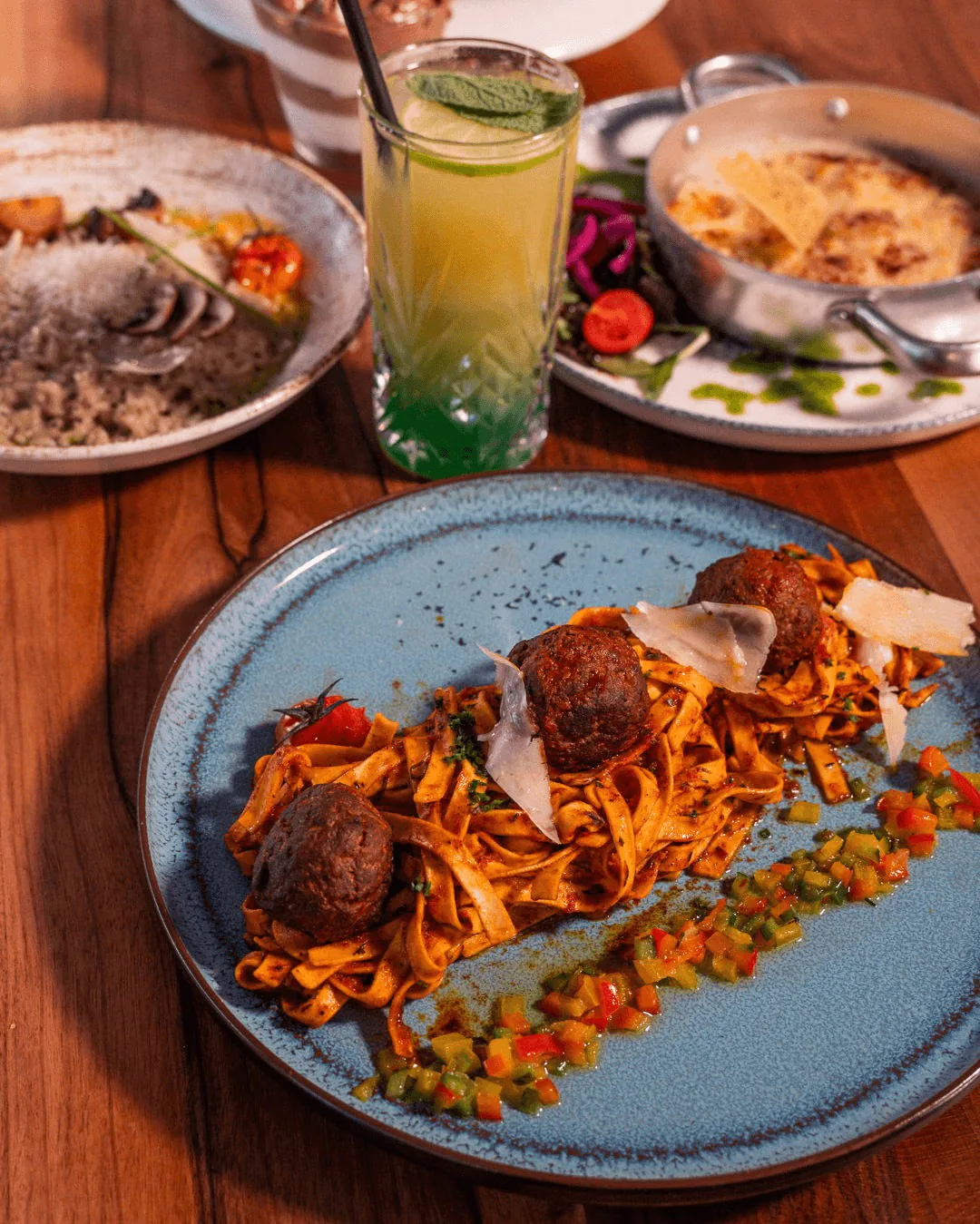

Frequently asked
Choosing your beef, in practice
What is the most tender cut of beef?
The fillet is the most tender, being a muscle under the vertebrae that is almost never used. Its texture is buttery, its taste milder than the rib-eye's.
Which cut for a good grilling steak?
Pick a tender, marbled cut: rib-eye for flavour and melt, sirloin for a franker balance, fillet for delicacy. Flank and hanger are excellent tasty alternatives.
What does marbling do in a cut of beef?
Marbling is the fine veins of fat in the muscle. As it cooks, the fat melts and bastes the meat from within: the finer and more even, the juicier and more tender the cut.
How do I recognise fresh beef?
A bright, frank red, creamy to pearly-white firm fat, springy flesh that bounces back, and a very discreet smell. Any greyish tint or strong odour means walk away.
Which cut for a braised dish?
Choose a collagen-rich working cut: chuck, cheek, shin. Cooked long and slow, they turn meltingly tender, perfect for a beef stew or pot-au-feu.
Does ageing change the cut you choose?
Yes. Beef aged for several weeks gains tenderness and deep aromas. On a rib-eye or sirloin, ageing transforms the experience — the same cut, aged, offers far more than fresh.
Read on
Find all our practical guides, pairings and steakhouse know-how in our conseils viande et vin.
Fancy the fine cut without the guesswork?
Aged Black Angus rib-eye, cut thick and seared to order, a cellar of over 200 references and service until 1 a.m., in Plan de Campagne.