
The journal — Beef know-how
Where does the rib-eye come from
Before it hits the pan, the rib-eye is a story of anatomy, butchery and farming. Let us trace the cut back to its source: where it sits on the animal, where its name comes from, and what sets a great rib-eye apart.
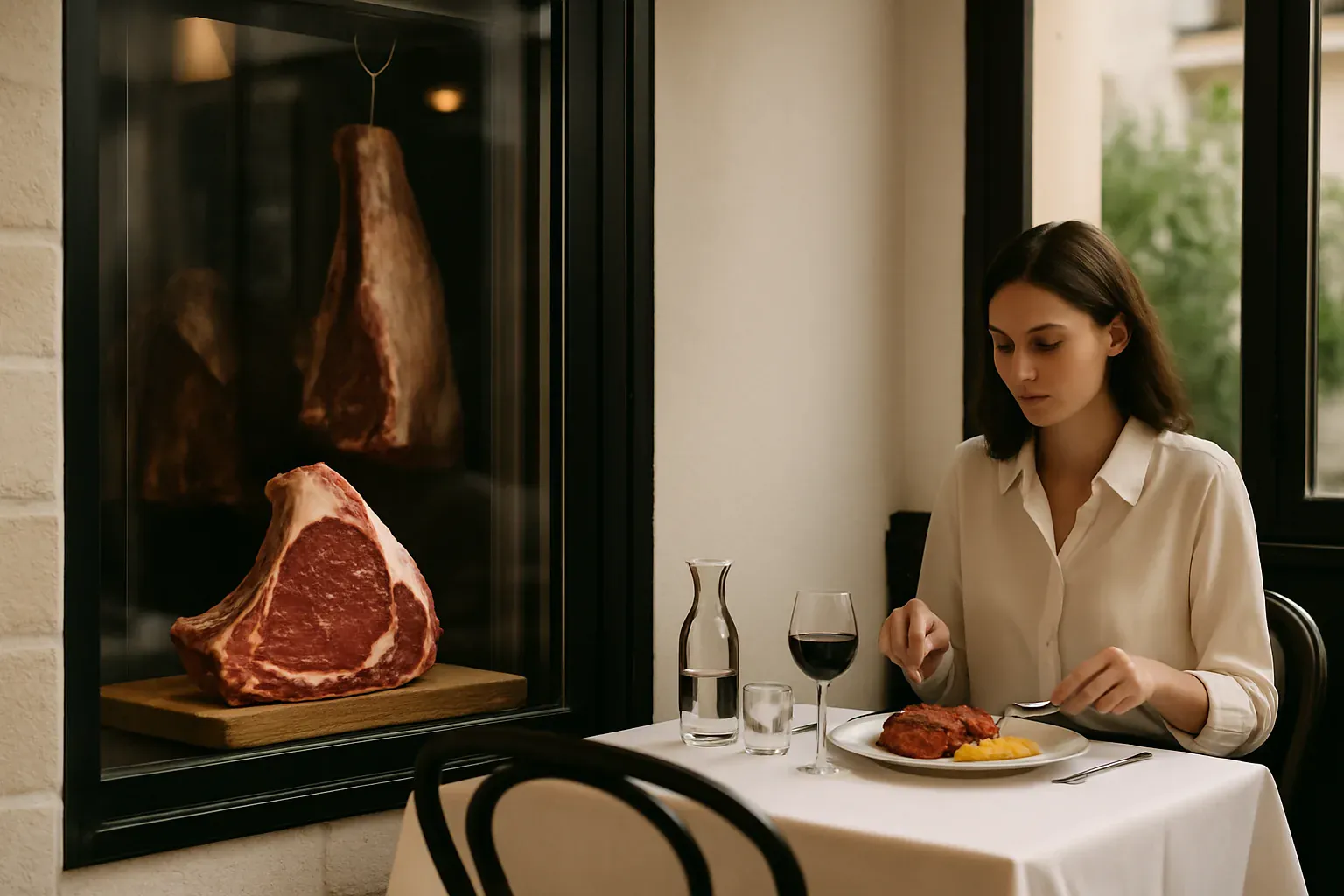
The essentials in thirty seconds
The rib-eye (entrecôte) is cut from the rib section on the back of the ox — hence its French name, meaning "between the ribs". It comes from the same area as the bone-in rib but boned out, and sits next to the sirloin. Its marbling depends on the breed (Black Angus, Wagyu, French beef breeds) and diet. A great rib-eye rests on three pillars: the animal's origin, the butcher's cut and ageing time.
The anatomy
Where the rib-eye
sits on the ox
The rib-eye is taken from the animal's back, in the rib section between shoulder and loin — a muscle the ox uses little, so it stays tender and laced with fat.
It runs along the dorsal vertebrae; the butcher lifts the loin, removes the rib bone and slices thick pieces across the muscle. That precise origin — a lightly worked, richly marbled muscle — is what makes it a prized cut.
The name
Where the name
comes from
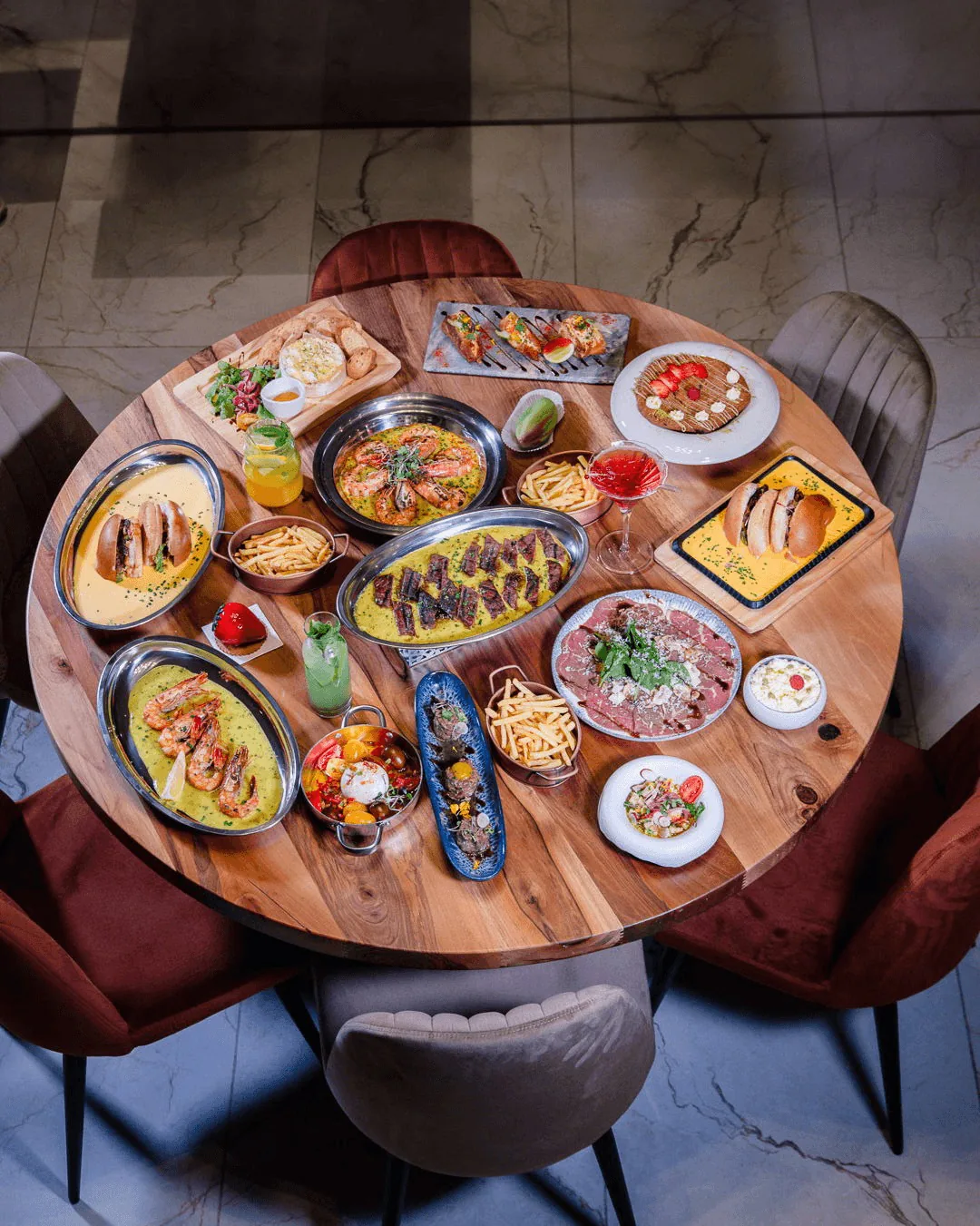
"Entrecôte" splits into "entre" and "côte": the meat between the ribs. The term appears in French in the 18th century.
In English-speaking countries the same area gives the rib-eye — "the eye of the rib", after the round central muscle. Two words, one cut: its anatomical origin is agreed on across cuisines.
The butchery
From rib section
to plate
The rib section is lifted as one loin. From it the butcher can draw the bone-in rib, or bone it out for rib-eye. The quality of the cut is decisive.
A good rib-eye is cut thick, at least three centimetres, across the grain, with a rim of fat that melts and bastes the meat. That hidden handwork explains why two steaks from one animal can differ so much.
Don't confuse them
Rib-eye, rib, sirloin
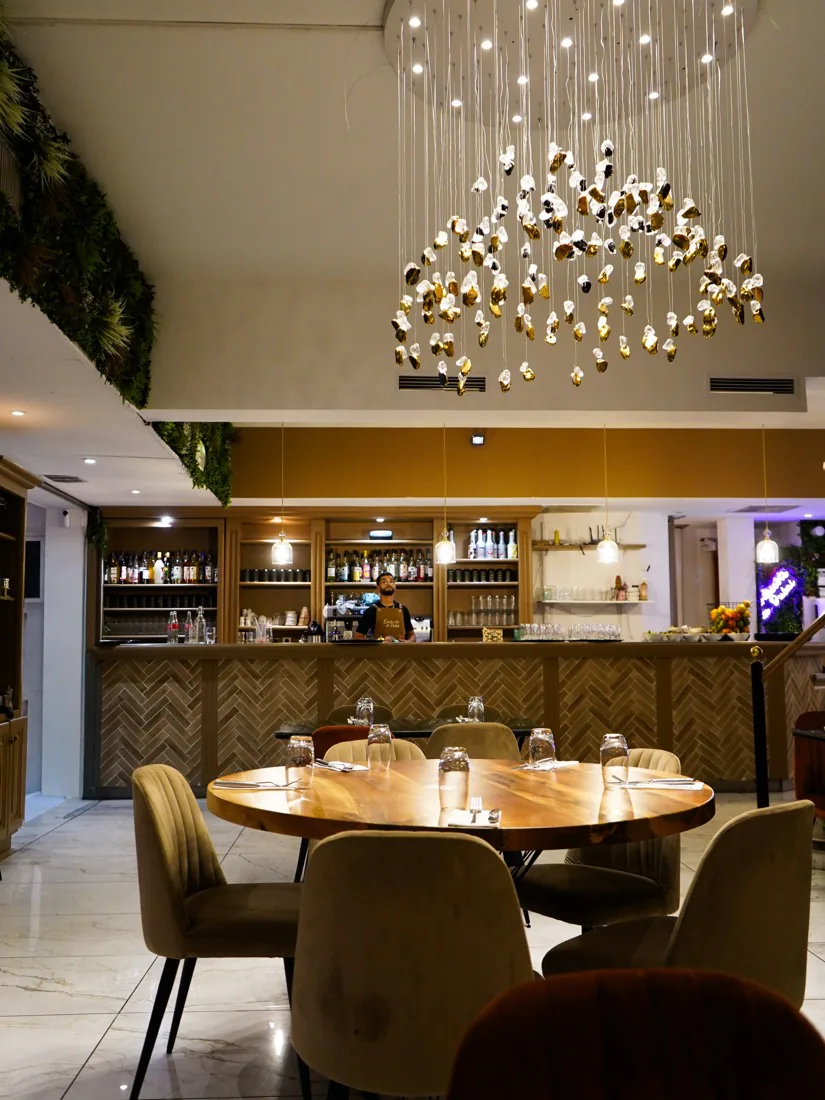
Three neighbouring cuts from the same back region, often confused. Here is what really sets them apart.
The rib-eye
Boned slice of the rib section, richly marbled. Pan- or grill-cooked as an individual portion, about three centimetres thick.
The bone-in rib
The same cut, but with the rib bone kept on. Larger, often shared; the bone adds flavour and protects the meat.
The sirloin
Just behind the rib-eye in the loin. A little leaner, tighter grain, firmer texture and a more even bite.
The animal origin
The breeds behind
great rib-eyes
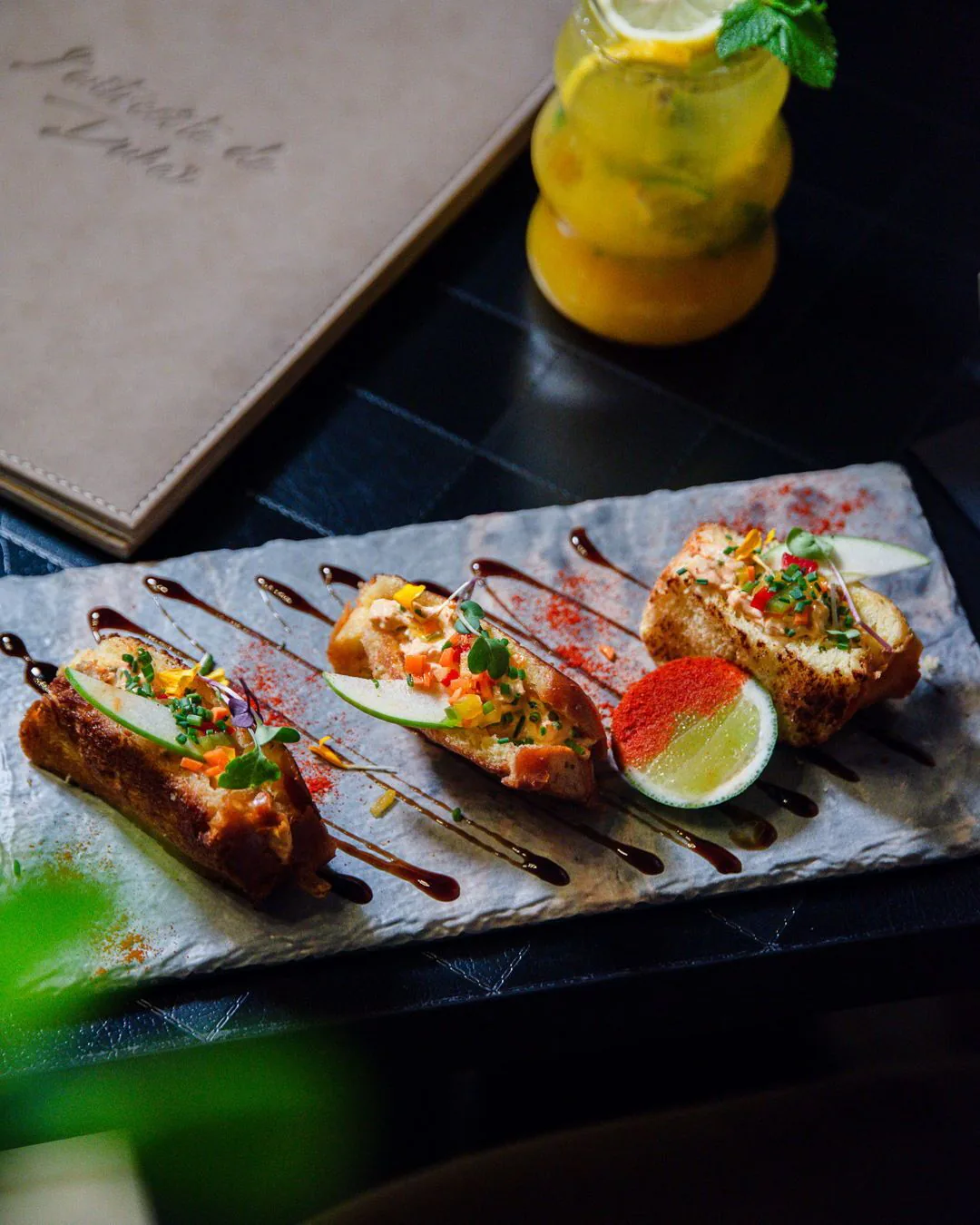
A rib-eye's origin is also its breed: marbling depends first on genetics.
- Black Angus, prized for even marbling and tenderness — the backbone of most great steakhouses.
- Japanese Wagyu, whose extreme fat gives a spectacularly melting meat.
- French beef breeds — Charolaise, Limousine, Aubrac — loved for their honest, characterful flavour.
The terroir
Terroirs and farming
Same breed, different farming, different rib-eye. Grass-fed beef gives a yellower fat and a greener taste; grain finishing favours richer marbling and a milder flavour.
A rib-eye's origin is geography as much as anatomy. A good restaurant knows where its meat comes from and why — the first sign of a serious steakhouse, long before the cooking.
The time
Ageing, a second birth
The rib-eye needs time. After slaughter the meat stiffens, then relaxes over days as its enzymes work. That is ageing — it tenderises and concentrates flavour.
Dry ageing, the most prestigious, matures the piece in open cold storage for weeks: it loses water, deepens in flavour and gains notes of hazelnut and butter — almost a second birth for a well-sourced cut.
The trained eye
Spotting a good rib-eye
- Fine, even marbling spread through the muscle, not just on the edges.
- A deep, honest red colour, neither brown nor dull.
- A cream-coloured fat rim, firm rather than oily.
- A generous thickness, at least three centimetres.
- A tight grain and firm flesh that springs back under a finger.
- A stated origin: breed, provenance and ageing time clearly given.
The culture
A bistro classic
The rib-eye is a pillar of French bistro culture. From the 19th century it graced Parisian brasserie menus, seared in butter and served with fries — the famous "entrecôte-frites".
It has since travelled: pepper sauce, herb butter, guarded secret sauces — and today, oriental flavours like ours. But its origin never changes: a cut from the rib section, born between the ribs of the ox.
Our table
Where our
rib-eye comes from
At L'Entrecôte de Dubaï, origin is the starting point. We work with aged beef, including Black Angus rib-eye, chosen for its marbling and depth of flavour, then cut and cooked to reveal its best.
Our kitchen blends French bistro know-how with an oriental signature, without covering the beef. And because a great cut deserves a great wine, our sommelier and cellar of over 200 references extend the experience in Plan de Campagne.
Discover the wine cellar
Frequently asked
The rib-eye's origin, made clear
Which part of the ox does the rib-eye come from?
The rib-eye is taken from the rib section on the ox's back, between shoulder and loin. It is a lightly worked, naturally tender and marbled muscle from the prime part of the carcass.
Why is the cut called "entrecôte"?
The French name splits into "entre" and "côte": originally the meat between two ribs. Usage later widened to the whole boned rib slice.
What is the difference between rib-eye and bone-in rib?
Both come from the same back region. The bone-in rib keeps the rib bone and is often shared, while the rib-eye is boned out and cut into individual portions.
Are rib-eye and entrecôte the same cut?
Yes. The English rib-eye matches the same rib-section area as the French entrecôte. "Rib-eye" means "eye of the rib", after the round, marbled central muscle.
What makes a rib-eye marbled?
Marbling — the fine veins of fat in the muscle — depends mainly on the breed, such as Black Angus or Wagyu, and on diet. Grain finishing favours richer marbling.
Does ageing change the meat's origin?
No, but it reveals its potential. Ageing matures the piece for weeks, tenderising the fibre and concentrating flavour with notes of hazelnut and butter on a well-sourced cut.
Read on
Find all our practical guides, pairings and steakhouse know-how in our conseils viande et vin.
Keep exploring
Taste the difference at the table
Aged Black Angus rib-eye, oriental flavours, a cellar of over 200 references and service until 1 a.m., in Plan de Campagne.